
Opening Remarks by Rose Helm at the 2025 Heads Retreat in Newport, RI
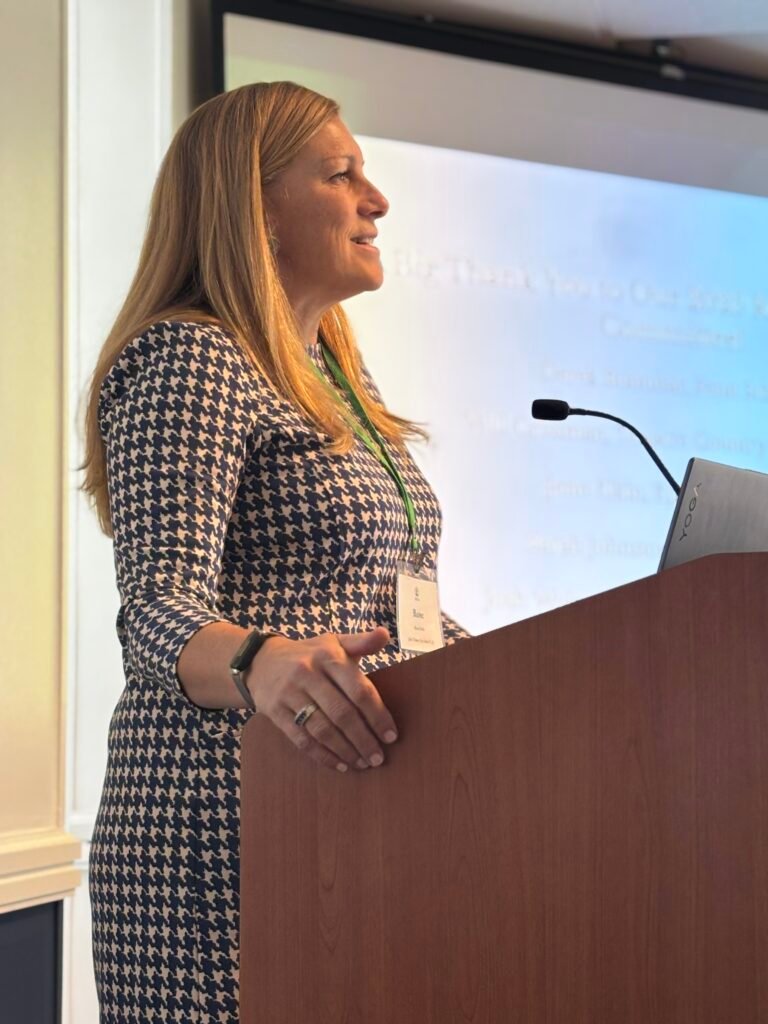
Leading an elementary school is unlike any other job in education. It is equal parts head and heart, logic and laughter, spreadsheets and sticky fingers. It is demanding, joyful, humbling, and, at times, lonely—which is exactly why this space, and this community, matters so much.
Over the past several years, our communities have lived through a time of deep emotion and polarization. We’ve seen the recurrence of hate crimes, violence, and discord—and like many of you, I’ve felt the weight of watching history seem to repeat itself without a clear path toward resolution or peace. And yet, I find that working in an elementary school offers the antidote. When the world feels heavy, the spirit of childhood reminds us there is still light, and there is still hope. Every day, we get to see the best parts of humanity in the faces of our students: curiosity, kindness, resilience, and joy. The work we do doesn’t just prepare children for the future; it helps light the path toward a better one.
At my school, a K-6 school in Los Angeles, we have a beloved tradition each December called Carols that has occurred every winter since the school’s founding in 1929. During the program, students recite a letter written by our founders’ only son, John Thomas Dye III, while he was stationed in Italy during World War II—just months before he was killed in action. In his letter, he wrote about the “simple sureness” of children uniting in song. That phrase has always stayed with me. Even in the darkest moments of war, he found hope in the joy of childhood. And that, to me, captures the heart of what we do: celebrating childhood, which as we know can be a force for good.
Just last week, our students held one of our favorite events, Music for Lunch Bunch—a quarterly “no-talent” talent show. For 45 minutes, I watched children sing Taylor Swift, dance to K-Pop Demon Hunters, and invent something brand new: synchronized swimming on land—performed by one of our 6th grade advisories. The songs they chose—about friendship, empowerment, and resilience—reminded me that these children already understand what it means to lift one another up. Their joy doesn’t erase the world’s hard truths; it helps us face them with courage and purpose.
That same spirit of connection and lifting one another up is what brings us together here at ESHA.
Each month, I meet for dinner with nine other women Heads of School from across Los Angeles. We span different ages, school sizes, and zip codes, but we share a deep understanding of the unique challenges—and gifts—of this work. Those dinners are a lifeline. I leave feeling full, not just from the food and wine, but from the laughter, the empathy, and the knowledge that no matter what each of us is facing, we show up for one another. And because of that, I can show up stronger for my own community the next day.
This is the beauty of affinity—the comfort of being with people who get it. Many of our schools have affinity groups for employees: spaces for BIPOC, LGBTQ+, Jewish, and other underrepresented educators to connect and feel a sense of belonging. Those spaces matter deeply within our schools. When that network extends beyond your school—when it reaches across cities, regions, and states—it becomes even more powerful. Our regional association gatherings, the NAIS conference, and gatherings like this one, remind us that we are not alone in this work.
When I was first interviewing to become Head of School, my mentor, Wanda Holland Greene, Head of The Hamlin School in San Francisco, told me, “Rose, this is a lonely job.” And she was right. Being the only person in your community who carries the particular weight of this role can sometimes feel isolating.
But ESHA changes that. This community of peers is an antidote to loneliness: a reminder that we are, in fact, part of something much bigger than our individual schools.
That’s why I’ll always make the trip—no matter where this retreat takes place—because being here, among people who understand the complexities and joys of this work, restores me.
Over the next three days, we’ll have the chance to learn, to share ideas, and to remember that connection is not a distraction from the work; it is the work. Because when we return home, we’ll jump right back into the wonderfully chaotic world of elementary school life.
We’ll hand out ice packs and band-aids, tie shoe laces, and mediate disputes over who’s first in line. We’ll support educators who teach children to sound out CVC words, play the ukulele, and solve long division in two different ways. We’ll email parents who are worried about a B+, and we’ll reassure others that a poor choice is just another chance to learn and grow, in a place where their child is safe and loved.
There will be days of laughter and exhaustion, of triumphs and messes—lost teeth, smelly classrooms after PE, fierce four-square games, and more rainy-day recesses than we’d like. There will be moments of wonder and heartbreak, and everything in between. But every one of those moments is part of the tapestry of childhood—and of our vocation as Heads of School.
Because in the end, what our students remember might not be the math lesson or the science fair. They’ll remember us—that we cared, that we showed up, that we created a place where they felt known and loved.